Léon Radegonde
(b. 1950, Le Digue, Seychelles)
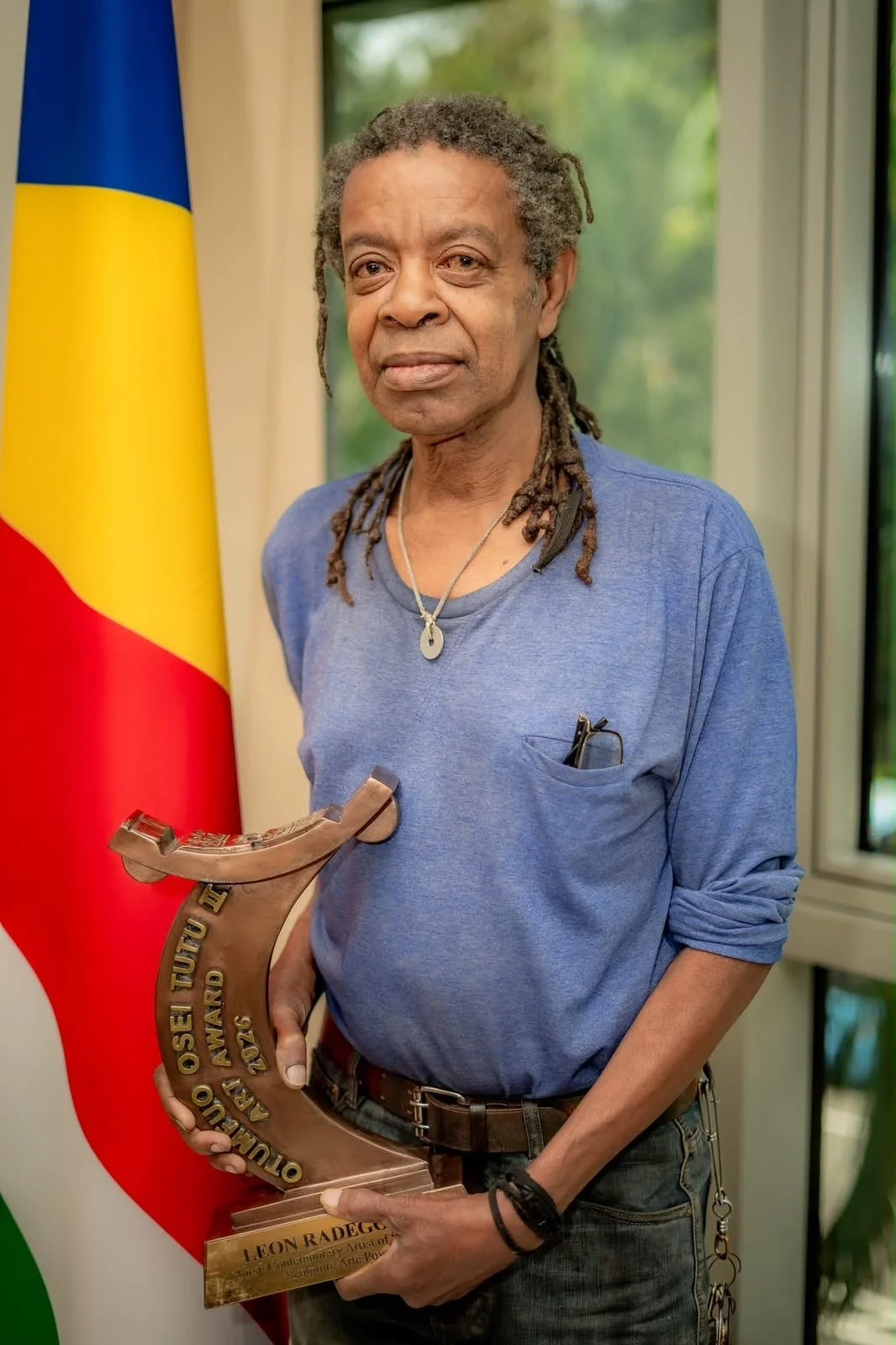
Léon Radegonde was born in 1950 on the island of La Digue, Republic of Seychelles, where he spent his childhood and completed his primary schooling. In 1964 he entered Seychelles College on Mahé, and it was there, at seventeen, that he developed an interest in drawing after watching a classmate doodle. It was an influence he has described as staying with him ever since. With no formal art curriculum available to him at school, he taught himself through books and practice, sitting and passing an O-Level in Art in 1969.
After completing his A-Levels in 1970, Léon travelled to Quebec, Canada, to study for a degree in French, continuing to draw and paint alongside his studies. In 1975 he went to the University of Newcastle-upon-Tyne to train as a French teacher, where he also secured art training despite having no advanced background in the subject. He began teaching at Seychelles’ Teacher Training College in 1976, a role he held, with a two-year break in 1980–82 to take up a French scholarship in formal art training at the University of Haute-Bretagne, until 1986 when he moved into cultural administration with the Ministry of Culture. He remained there for eighteen years, his final post as Director of the Kreol Institute. In 1988, as Chairperson of the Association of Seychellois Artists, he helped establish the Seychelles Biennale.
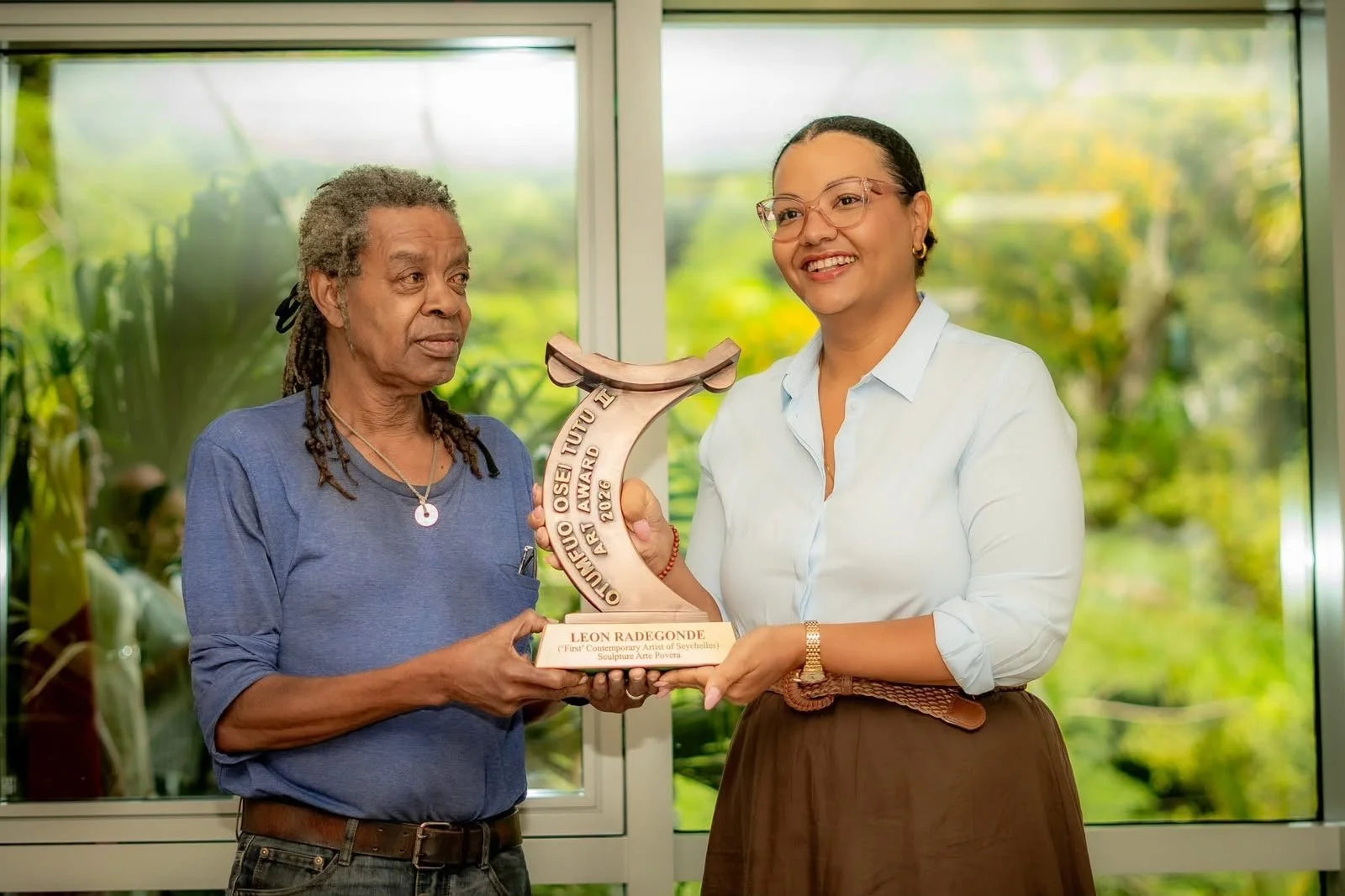
In 2003, Léon left employment to work full-time as an artiste-plasticien. His practice since has turned to unconventional methods and materials, found objects, images and ephemera reworked into a visual vocabulary shaped as much by traditional and ancient sources as by contemporary ones. Themes of time, age and identity run throughout the work, which represented Seychelles at the 56th Venice Biennale in 2015. In 2026 Léon was honoured with the Asantehene Otumfuo Osei Tutu II Art Award, and the Manhyia Palace Museum in Kumasi has acquired a work by him.